
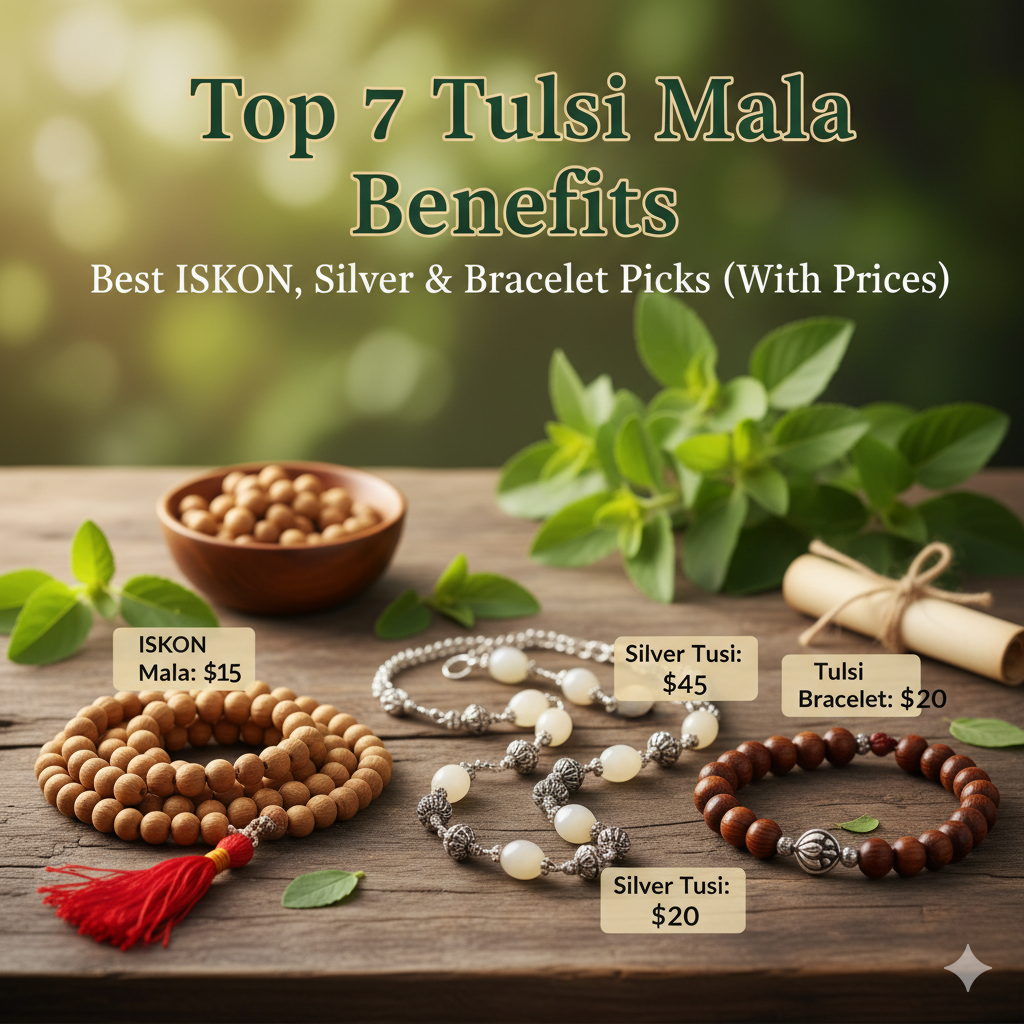
Tulsi mala (rosary made of holy basil/Tulsi beads) is one of the most popular devotional items in Vaishnava traditions and among people who use malas for meditation, stress relief and daily prayer. Beyond spiritual significance, Tulsi (Ocimum sanctum) is a well-studied herb with adaptogenic, anti-inflammatory and metabolic benefits — which helps explain why wearing or using Tulsi products is meaningful to many people. This guide lists 7 clear benefits of Tulsi mala, then shows top picks for ISKCON (ISKON) malas, silver-mounted Tulsi malas, and Tulsi mala bracelets with price examples and buying/care tips.
Top 7 Benefits of Tulsi Mala
Below are seven benefits readers commonly search for — each explained simply and linked to evidence or respected sources where appropriate.
1. Supports stress reduction & mental calm (adaptogenic effect)
Tulsi is considered an adaptogen — it helps the body resist physical and mental stressors. Human studies and clinical reviews show Tulsi extracts can reduce markers of stress and improve subjective anxiety and mood, which explains why many people feel calmer when using Tulsi-based practices (tea, essential oil, or wearing/using Tulsi mala during prayer/meditation).
2. Helps concentration and supportive for meditation practice
Using a mala for japa (repetition of mantra) is a tactile way to anchor attention. Tulsi mala — with its spiritual association and the ritual of bead-counting — makes it easier for many people to maintain focus during meditation or chanting, improving mindfulness and continuity of practice. Traditional practitioners and devotional groups emphasize this benefit.
3. Traditional protective and devotional meaning (spiritual benefit)
In Vaishnava tradition, Tulsi mala is worn as a sign of bhakti (devotion) and spiritual protection. Wearing a Tulsi mala marks the devotee’s connection to Krishna and Tulsi’s spiritual identity — a social and psychological benefit that strengthens religious identity and ritual consistency.
4. Antimicrobial and air-purifying reputation (traditional + modern evidence)
Tulsi has documented antimicrobial properties in lab studies and traditional use as a purifying herb. While wearing a mala does not substitute for medical treatment, the herb’s antimicrobial reputation supports historical beliefs that Tulsi creates a “cleaner” personal space spiritually and symbolically. For evidence on Tulsi’s antimicrobial and health-supporting compounds see medical reviews.
5. Metabolic & inflammation-supporting properties (when consumed)
Scientific reviews find Tulsi may help metabolic markers (blood sugar, cholesterol) and reduce inflammation when used as a supplement or consumed as tea/extracts — this supports the broader health value associated with Tulsi in lifestyle practices. Note: these benefits apply to Tulsi consumption and standardized extracts; wearing a mala is primarily symbolic and supportive rather than a direct route to these systemic effects.
6. Emotional balance & improved sleep for some users
Many users report better emotional balance and improved sleep when they make Tulsi-based rituals part of their bedtime or meditation routine. While individual responses differ, this result is consistent with Tulsi’s adaptogenic effects and the calming benefits of a regular spiritual routine. If you notice sleep changes, adjust how you use the mala (remove at night if needed).
7. Eco-friendly, biodegradable devotional jewelry
Tulsi beads are plant-based and biodegradable, so Tulsi malas are an environmentally friendlier devotional option compared with plastic or synthetic rosaries. For buyers who prefer sustainable products, Tulsi malas check the eco box while also carrying centuries of devotional use. (See product pages for artisan-made and ethically sourced options.)
Best ISKCON (ISKON) Tulsi Malas — picks & price ranges
If you want an authentic ISKCON-style Tulsi mala (often made and blessed according to Mayapur/ISKCON tradition), these are reliable search targets and sellers to check:
- Typical ISKCON Kanthi/Tulsi mala (108+1 beads) — standard devotional format sold by Mayapur/ISKCON shops and specialized retailers. Expect prices from around ₹600–₹2,000 for plain original Tulsi malas depending on bead size and craftsmanship.
- ISKCON-branded or temple-made malas — sometimes priced slightly higher because of temple blessing and provenance; check temple shops or authorized online stores. Example listings show bracelets and kanthis around ₹695–₹1,990 for bead bracelets or mixed-metal options.
(Price tip: ISKCON/temple malas emphasize authenticity and blessing rather than flashy adornment; buy from trusted temple shops or well-known devotional retailers.) (Tulsimala.in)
Best Silver Tulsi Malas — why choose silver, and price examples
Silver-capped or silver-mounted Tulsi malas combine Tulsi beads with sterling or 92.5% silver components (spacers, pendants). Reasons to choose silver:
- Silver resists tarnish and is hypoallergenic for many people; it adds durability and a dressier look.
- Silver-mounted malas are popular as gifts or for devotees who want a devotional item that doubles as jewellery.
Price examples & sources
- Pure silver Tulsi malas and pendants are commonly listed in the ₹2,000–₹12,000 range depending on silver weight and ornamentation. (See sample shop listings from devotional stores and online marketplaces.)
(Buying tip: if you want real silver, ask for a 92.5 hallmark or an invoice showing metal content.)
Best Tulsi Mala Bracelets — compact, wearable options
Tulsi bracelets are a popular everyday alternative to full malas — easy to wear, affordable, and often sold with silver spacers or pendants.
Where to look & typical prices
- Amazon, Etsy and eBay offer a wide range: simple Tulsi bead bracelets can be under $10–$30 (₹500–₹2,500), while designer or silver-accented bracelets are ₹1,500–₹7,000 or more. Examples on Amazon, Etsy, and marketplace shops show this range.
(Buying tip: check bead size (6–8mm common), whether beads are sealed (to resist moisture), and if metal parts are sterling silver or plated.)
Authenticity, quality checks & buying tips
- Source & blessing: For ISKCON-style malas, buy from temple shops or authorized devotional retailers for authenticity.
- Smell test & finish: Genuine Tulsi beads can retain a faint herbaceous scent initially; well-finished beads will be smooth, evenly drilled and knotted.
- Silver checks: Ask for 92.5 (sterling) hallmark or a seller invoice; heavy silver pendants will raise price
- Bracelet fit & bead seal: If you plan to wear a Tulsi bracelet daily, look for sealed beads or ask the seller about lacquer/sealant to prevent sweat/damage.
- Ethical sourcing: Prefer artisans or shops that state ethical sourcing and small-batch manufacturing — it supports workers and reduces risk from low-quality mass production.
Care & cleaning
- Wipe beads with a soft dry cloth after regular use; avoid soaking in water for long periods.
- If beads are silver-mounted, dry metal parts immediately after accidental wetting to avoid tarnish.
- Re-knot malas if thread shows wear; that prevents bead loss.
- If you use the mala daily for japa, store it in a clean pouch when not in use.
Safety & contraindications
- Tulsi is safe in rituals and as a wearable devotional object, but if you’re consuming Tulsi supplements or extracts, consult a healthcare provider if pregnant, breastfeeding, on blood-thinning drugs or with chronic disease — clinical reviews recommend professional guidance for concentrated extracts.
- For jewellery: if you have nickel allergies, choose sterling silver or hypoallergenic metal options. For small children, watch for choking hazards with loose beads.
FAQs (short)
Q: Do Tulsi malas actually improve health?
A: Wearing a mala helps in ritual, meditation and stress reduction through mindful practice; systemic health effects come from Tulsi consumption in extract/tea form — those effects are supported by clinical reviews.
Q: Which is better — ISKCON Tulsi mala or silver-mounted?
A: It depends on purpose: ISKCON malas are primarily devotional and affordable; silver-mounted malas are durable, dressier and often used as devotional jewelry. Choose what fits your daily use and budget.
Q: Are Tulsi bracelets good for daily wear?
A: Yes — they’re compact and convenient. Prefer sealed beads or protective finishes if you’ll wear them while sweating or washing hands frequently.
Final takeaway
Tulsi mala offers a mix of spiritual meaning, ritual focus and symbolic health-support (backed by the herb’s documented adaptogenic and anti-inflammatory properties when consumed). For buying, choose trusted ISKCON/temple sources if you want devotional authenticity, sterling-silver options for a dressier, hypoallergenic piece, and bracelets for everyday wear — all available across devotional shops and mainstream marketplaces. Use the buying and care tips above to pick the right mala for your life and practice.